

Buying scrubs in Utah can happen in two practical ways: online shopping or in-store fitting. Both options can work well for nurses, medical assistants, dental staff, veterinary teams, healthcare students, physicians, and clinic employees. The better choice depends on the buyer’s timeline, sizing confidence, workplace dress code, preferred brands, and need for hands-on fit support.
Healthcare workers comparing scrub stores in Utah often want more than a basic uniform purchase. They need scrubs that match workplace color rules, feel comfortable during long shifts, fit properly through the shoulders and waist, and hold up through repeated washing. Online ordering can make repeat purchases easier, while local store visits can reduce sizing mistakes.
Quick Answer
Buying scrubs online is convenient when the buyer already knows the preferred brand, size, color, and fit. Buying scrubs in store is better when the shopper needs to try on different brands, check pant length, compare fabric feel, confirm color, or get help before buying several sets.
A healthcare worker should consider in-store shopping when:
- Buying scrubs for the first time
- Starting a new job or clinical rotation
- Switching brands or fit styles
- Comparing petite, regular, tall, or short lengths
- Checking workplace-approved colors
- Trying joggers, cargo pants, flare pants, or straight-leg styles
- Buying for a healthcare team
- Needing embroidery or group uniform guidance
Online shopping may be better when:
- The buyer already knows size and brand
- The required color is clear
- Repeat ordering is needed
- The shopper wants to browse categories quickly
- Local travel time is inconvenient
- The buyer needs easy access to brand or category filters
Why Scrub Shopping Is Different for Healthcare Workers
Scrubs are not regular casual clothing. Healthcare workers may wear them through long shifts, repeated movement, patient care, charting, walking, bending, lifting, cleaning, and team interaction. A scrub set that looks acceptable on a screen may not feel comfortable after a full workday if the fabric is stiff, the pants are too long, or the top pulls at the shoulders.
The healthcare workforce includes many roles with different daily demands. The U.S. Bureau of Labor Statistics groups healthcare occupations across roles such as nurses, medical assistants, physicians, technologists, dental professionals, and support workers, each with different work environments and uniform expectations. See the BLS overview of healthcare occupations for broader context.
For scrub buyers, the main goal is simple: choose workwear that supports the job rather than creating distractions during the shift.
Good scrubs should provide:
- Comfortable movement
- Workplace-appropriate coverage
- Proper pant length
- Useful pockets
- Breathable fabric
- Durable seams
- Easy laundering
- Professional appearance
- Color consistency
- Reliable reordering options
The Case for Buying Scrubs In Store
In-store scrub shopping is especially useful when fit is uncertain. Scrub brands, collections, and cuts can vary significantly. A medium in one brand may feel relaxed, while another medium may feel slim or athletic. Pant rise, inseam, waistband style, shoulder width, and fabric stretch can all change the fit.
A local medical scrubs store gives shoppers a chance to compare these details before purchasing.
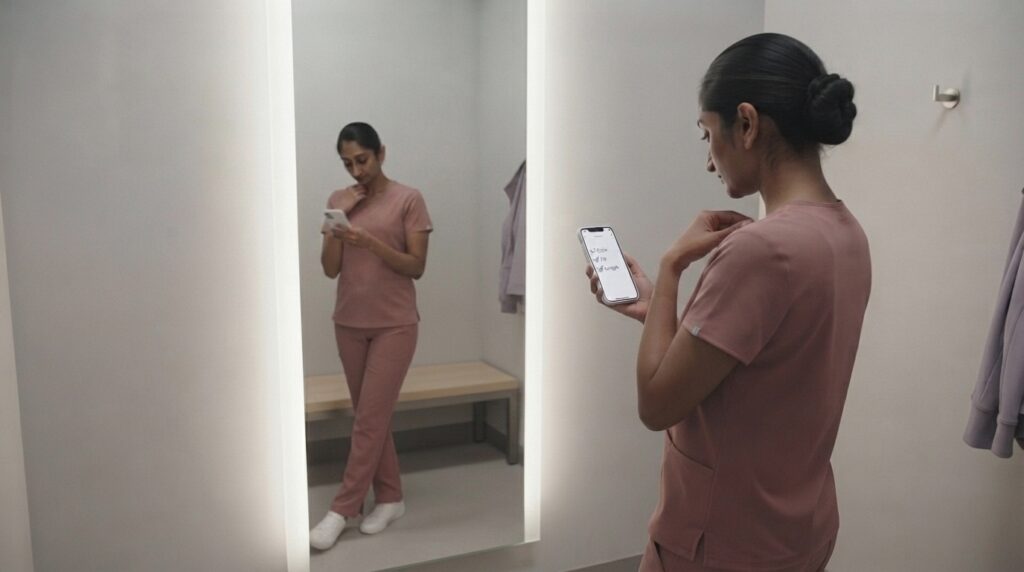
In-store shopping helps with fit
Trying on scrubs helps buyers check:
- Shoulder mobility
- Top length
- Chest and back comfort
- Waistband security
- Pant rise
- Pant length
- Pocket placement
- Fabric weight
- Stretch and recovery
- Neckline comfort
- Coverage while bending or reaching
This is important because healthcare workers often discover fit problems only after moving around. A scrub top may look fine while standing still but pull when reaching. Pants may fit at the waist but drag at the hem. A jacket may feel comfortable open but tight when zipped.
When Local Fit Support Matters Most
Local store support is most useful when the buyer is making a decision that cannot be judged from product photos alone.
First-time scrub buyers
Healthcare students, new medical assistants, and first-time clinical workers may not know which brands or cuts fit best. In-person fitting can help them avoid buying several sets in the wrong size.
Workers changing brands
A healthcare worker who has worn one brand for years may not automatically fit the same size in another. Trying on a new collection can prevent returns and frustration.
Petite and tall shoppers
Pant length is one of the most common scrub-shopping problems. Petite, tall, short, and regular lengths should be tested when possible, especially for straight-leg and flare styles.
Workers between sizes
Someone between sizes may need to compare fabric stretch, waistband style, and top cut before deciding.
Team uniform shoppers
Clinics and healthcare teams may need staff to try approved options before placing a larger group order. This helps reduce sizing problems and exchange requests.
The Case for Buying Scrubs Online
Online scrub shopping is convenient when the buyer already knows what works. It can save time, support repeat orders, and make it easier to browse categories by brand, gender, garment type, and size.
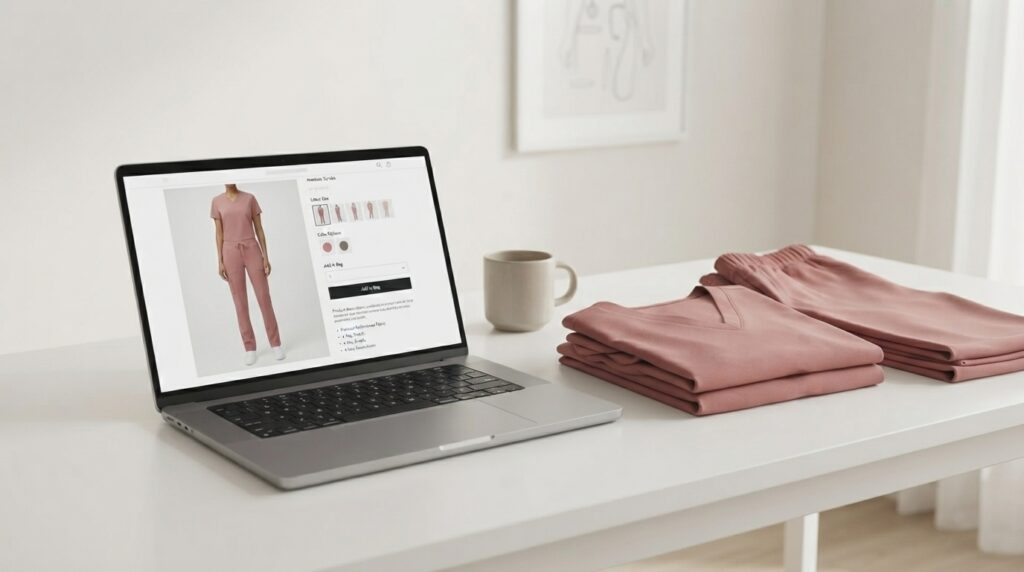
Online shopping is especially useful for:
- Repeat purchases
- Known brand and size
- Replacing a favorite scrub top or pant
- Browsing multiple categories
- Ordering outside store hours
- Comparing brand collections
- Buying jackets, lab coats, or accessories
- Reviewing return policies before purchase
A strong online scrub store should make filtering simple. Shoppers should be able to narrow products by gender, size, color, length, brand, style, and price.
What Online Scrub Shoppers Should Check
Online shopping works best when the product page and category structure give enough information to make a confident decision.
Before buying online, healthcare workers should check:
- Size chart
- Fabric content
- Product photos
- Fit description
- Pant length options
- Return and exchange policy
- Color availability
- Brand collection
- Product category
- Whether the item is final sale
- Shipping or pickup options
A buyer looking for healthcare uniforms near me may still use online browsing first, then visit a store to confirm fit. This hybrid behavior is common for healthcare workers who want convenience but do not want to guess on sizing.
Online vs In-Store: Which Is Better?
Neither option is always better. The right choice depends on the situation.
| Buying Need | Better Option | Why |
| First-time scrub purchase | In store | Fit, fabric, and pant length can be checked directly |
| Repeat purchase | Online | Faster when size and brand are already known |
| New job with strict color rule | In store or online | Depends on whether the buyer needs color confirmation |
| Petite or tall sizing | In store first | Pant length can be tested before repeat online orders |
| Buying for a team | In store plus online system | Staff can confirm sizing, then reorder more easily |
| Urgent purchase before a shift | In store | Immediate availability may matter |
| Comparing multiple brands | In store | Fabric and cut differences are easier to feel |
| Reordering known items | Online | Convenient and efficient |
How Utah Healthcare Workers Can Plan Their Purchase
Healthcare workers in Utah may have several reasons to buy scrubs locally. A new employee may need approved uniforms before orientation. A student may need school-approved scrubs before clinicals. A clinic manager may need coordinated uniforms for a full team. A nurse may need better-fitting pants for long shifts.
A practical buying plan can prevent wasted money and return issues.
Step 1: Confirm workplace requirements
Before shopping, confirm:
- Required color
- Approved scrub style
- Whether joggers are allowed
- Whether jackets must match
- Whether underscrubs are allowed
- Whether embroidery is required
- Whether lab coats are required
- Whether certain colors are role-specific
This should happen before browsing brands or styles.
Step 2: Decide whether fit needs to be tested
If the buyer is unsure about size, fabric, or pant length, in-store shopping is the safer first step. If the buyer already knows the preferred brand and size, online ordering may be enough.
Step 3: Choose the right category
Shoppers should narrow the decision by category:
- Women’s scrub tops
- Women’s scrub pants
- Men’s scrub tops
- Men’s scrub pants
- Scrub jackets
- Lab coats
- Underscrubs
- Scrub bags
- Stethoscope cases
- Petite pants
- Tall pants
- Short-length pants
Step 4: Compare fabric and fit
A good scrub choice should balance comfort, durability, and professional appearance. Fabric should move well, wash easily, and feel comfortable through a full shift.
Step 5: Buy one set before buying many
When trying a new brand or style, buying one set first can reduce risk. Once the fit is confirmed, repeat ordering becomes easier.
Fit Factors That Are Easier to Judge In Store
Some scrub details are difficult to evaluate online, even with good product photos.
Shoulder movement
Healthcare workers reach constantly. A top should not pull across the shoulders or chest when arms move forward or upward.
Waistband comfort
Waistbands can feel different while standing, sitting, bending, or walking. Trying on pants helps identify whether the waistband digs, slips, or rolls.
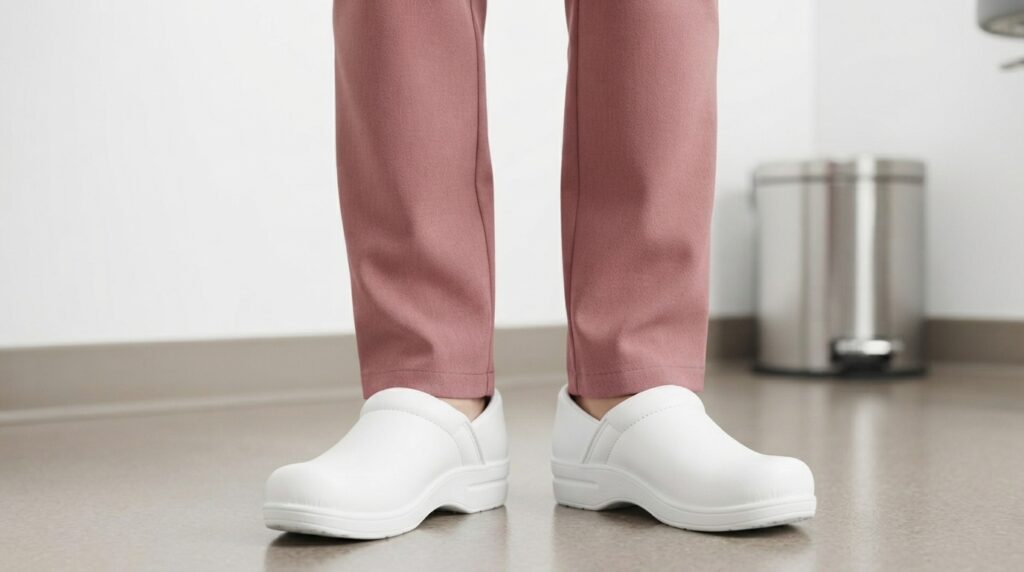
Pant length
Pant length is easier to judge with work shoes. Pants should not drag on the floor or feel too short when walking.
Fabric weight
Online descriptions may say “lightweight” or “stretch,” but fabric feel is personal. Some workers prefer soft and light, while others prefer more structure.
Pocket function
Pocket placement affects daily use. A pocket may look useful online but sit too low, feel bulky, or fail to secure essentials.
Why Long-Shift Comfort Should Guide the Decision
Healthcare workers often spend extended time standing and walking. NIOSH has discussed how prolonged standing may contribute to fatigue, leg discomfort, swelling, and low back discomfort. While scrubs are only one part of workplace comfort, poor uniform fit can add unnecessary irritation. More information is available from NIOSH’s resource on prolonged standing at work.
Long-shift scrubs should offer:
- Stretch fabric
- Breathable construction
- Secure waistbands
- Correct pant length
- Soft seams
- Useful pockets
- Easy-care fabric
- Coverage during movement
- A fit that does not require constant adjustment
Local Stores Help With Color Matching
Color can be a major issue for healthcare workers. Many employers use specific scrub colors by department or role. A color listed online may look slightly different depending on screen brightness, product photography, or fabric type.
In-store shopping can help buyers compare colors more accurately. This is useful when matching:
- Navy
- Ceil blue
- Royal blue
- Black
- Pewter
- Wine
- Teal
- Hunter green
- Department-specific shades
Teams should be especially careful with color matching. A clinic that lets every employee buy from random sources may end up with inconsistent shades, even when everyone thinks they ordered the same color.
When a Google Business Profile Helps
For local shopping, a Google Business Profile can help confirm store hours, directions, contact details, and map location before visiting. This is useful for healthcare workers with limited time between shifts, classes, or appointments.
For example, shoppers in the Sandy area can review a medical uniform store in Sandy before planning an in-person scrub fitting.
Before visiting a store, buyers should check:
- Current hours
- Address
- Driving distance
- Phone number
- Store photos
- Recent updates
- Nearby access
- Whether a call ahead is useful for specific sizes or colors
Group Uniform Buyers Often Need Both Options
Group uniform shopping usually works best when online convenience and in-store support are combined. A clinic or healthcare team may need staff to try on sizes locally, then use an organized process for ordering and reordering.
A strong group buying process should include:
- Approved colors
- Approved styles
- Staff sizing
- Men’s and women’s fit options
- Petite and tall options
- Embroidery rules
- Payment model
- Reorder instructions
- New-hire process
- Return or exchange guidelines
This is especially helpful for dental offices, veterinary clinics, medical practices, med spas, urgent care centers, and other healthcare teams that need a consistent appearance without forcing every employee into one exact fit.
Hygiene, Care, and Workplace Policy Still Matter
Scrub buying should always align with workplace hygiene and laundering policies. The CDC’s guidance on standard precautions for infection control explains broader infection prevention principles used in healthcare settings. Uniform care should follow employer policies, clinical requirements, and garment care labels.
Before buying multiple sets, workers should check:
- Machine-wash instructions
- Drying instructions
- Whether the fabric wrinkles easily
- Whether the color may fade
- Whether embroidery needs special care
- Whether the garment shrinks
- Whether workplace policy requires changing after certain tasks
Easy-care scrubs are often more practical for healthcare workers who need several sets in weekly rotation.
Common Mistakes to Avoid
Buying only from photos
Photos help, but they cannot fully show fabric feel, stretch recovery, or fit during movement.
Ignoring return policies
Return and exchange rules matter, especially when buying a new brand or online order.
Choosing regular length by default
Petite, tall, short, and regular lengths should be considered. Pant length affects both comfort and appearance.
Buying multiple sets before testing one
Trying one set first is safer when switching brands or styles.
Overlooking workplace rules
Color, embroidery, jacket, underscrub, and jogger rules should be checked before purchase.
Assuming all brands fit the same
Scrub sizing varies by brand and collection. A known size in one brand does not guarantee the same fit in another.
Final Buying Checklist
Before choosing online or in-store scrub shopping, healthcare workers should ask:
- Is this a first-time purchase or repeat order?
- Is the required workplace color confirmed?
- Is the preferred brand already known?
- Does the buyer need to try on sizes?
- Is pant length uncertain?
- Are petite, tall, short, or regular options needed?
- Are jackets, lab coats, or underscrubs required?
- Are pockets important for the role?
- Does the fabric need to be lightweight or structured?
- Is embroidery needed?
- Is this for one worker or a full team?
- Are return and exchange rules clear?
The best scrub-buying choice is not simply online or in store. It is the buying path that helps the worker get the right fit, correct color, practical fabric, and reliable comfort for daily healthcare work.

FAQs
Is it better to buy scrubs online or in a store?
Buying in store is better for first-time sizing, fabric comparison, pant length checks, and color confirmation. Buying online is better for repeat orders when the buyer already knows the preferred brand, size, and workplace-approved color.
Why should healthcare workers try on scrubs before buying?
Trying on scrubs helps confirm shoulder movement, waistband comfort, pant length, fabric feel, and coverage. This is especially helpful for new healthcare workers, students, petite or tall shoppers, and anyone changing brands.
Can healthcare workers buy scrubs online after trying them in store?
Yes. Many workers use in-store shopping to confirm fit first, then reorder online later. This approach combines local fit support with online convenience.
What should Utah healthcare workers check before visiting a scrub store?
They should check store hours, address, directions, required scrub color, preferred size range, return policy, and whether specific categories such as petite pants, tall pants, jackets, or lab coats are needed.
Do group scrub orders work better online or in person?
Group orders often work best with both. Staff can use in-person sizing support to reduce fit issues, while an organized online or repeat ordering system can make future purchases easier for new hires and existing employees.