
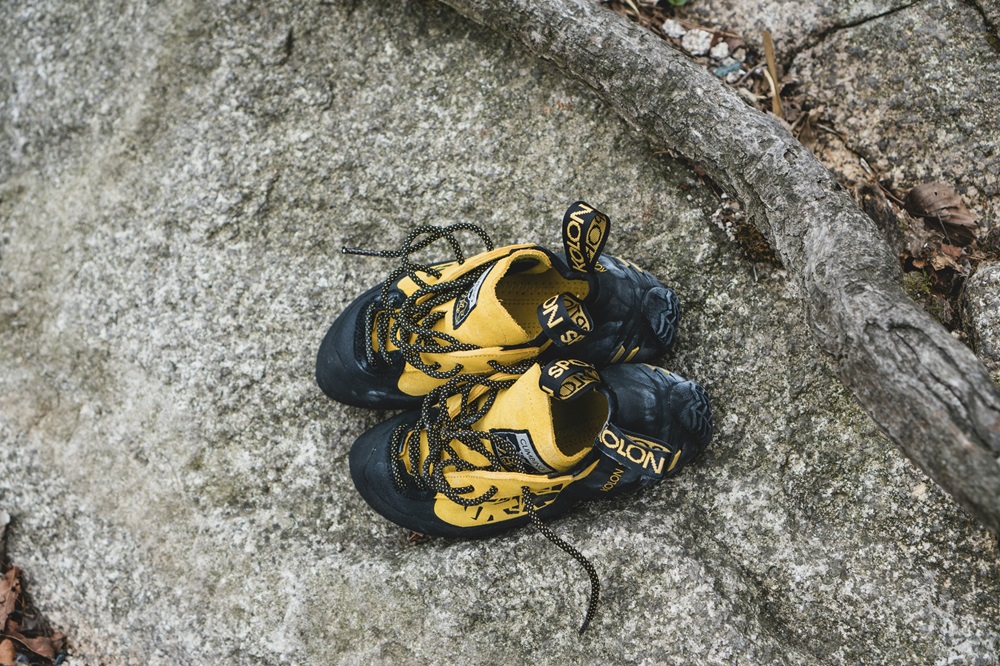
Climbers love talking about shoes. And if you spend enough time in climbing communities, you’ll find that some of those conversations get surprisingly heated.
Whether you’re browsing climbing shoes on sale or researching your next pair, it helps to know what the community actually thinks beyond the standard brand marketing. Here are some of the most common (and most debated) opinions in the climbing shoe world.
“Most people are wearing shoes that are too aggressive for their level”
This one comes up a lot, and there’s real substance to it.
The general thinking: if you’re climbing in the V3 to V5 range indoors, you probably don’t need a shoe built for competition bouldering. A well-fitting, moderately stiff shoe will do the same job with a lot less foot pain.
There’s also a case to be made that soft shoes are better for developing footwork. When your shoe gives you feedback, you learn how to place your feet more precisely. Stiff, aggressive shoes can actually mask poor technique early on.
The rough consensus from more experienced climbers: below around V6 or 5.12, your shoe isn’t what’s holding you back.
“Downsizing is the worst advice for beginners”
One of the most persistent pieces of gym wisdom is “downsize your shoes.” And it causes real damage.
Sizing two full sizes down from your street shoe, being told they’ll break in, and ending up with bleeding toes after every session is a surprisingly common experience. Gym sales staff mean well, but blanket downsizing advice ignores the fact that fit varies wildly by brand, model, and foot shape.
The more accurate version of the advice: your climbing shoe should fit snugly, with no dead space, but it shouldn’t cause pain while you’re standing. Go down a little. Not a lot.
Also worth noting: street shoe sizing is already inconsistent. You might own three pairs of the same brand in three different sizes. “Go down from your street size” means almost nothing without a specific brand and model in mind.
“Gendered shoe sizing needs to go away”
A strong majority of climbers think the men’s/women’s labeling on climbing shoes is outdated and causes real problems.
The core issue is that foot volume and foot width don’t map neatly onto gender. A lot of climbers with narrower feet or smaller foot volume only have access to women’s models, even if those models don’t come in their size. And climbers with wide feet who need a smaller size often find that women’s shoes max out too early.
The practical solution most people want: label shoes by volume (high volume, low volume) and make them available in a full size range. Several brands have started moving this direction, but it’s slow going.
On the rubber side of this: some brands, including La Sportiva, do make women’s versions of certain shoes with softer construction, based on the logic that lighter climbers need less resistance underfoot. Adam Ondra wore the women’s version of the La Sportiva Solution Comp specifically because it was softer. That’s a legitimate technical distinction, even if the gendered branding around it is clumsy.
“Wide feet + tight heel is an unsolved problem”
This one doesn’t get enough attention.
A lot of shoes marketed as “wide fit” still have heels sized for a narrower foot. So you end up cramped through the midfoot and flopping around in the heel cup. For many climbers, there’s no shoe that solves both at once.
The request is simple: more lasts designed around genuinely wide feet, with heel cups that match. It sounds obvious, but the shoe market has been slow to respond.
“The Scarpa Drago is overhyped”
The Scarpa Drago has a strong reputation, and it deserves it when it fits your foot. The narrow last, the aggressive downturn, the Vibram XS Grip 2 rubber — it works well for what it’s designed to do.
But the keyword there is “when it fits.” The Drago’s geometry twists your foot into a specific position that suits pocket climbing and overhanging terrain. If your foot doesn’t respond well to that shape, no amount of hype changes anything. A lot of climbers buy Dragos on reputation and find they don’t work for them.
The fair take: it’s a good shoe. It’s also a shoe that fits a specific foot type and climbing style. “Good if the shape works for you” is probably more useful than treating it as a universal recommendation.
“Neutral shoes are underrated”
Performance conversations almost always default to aggressive shoes. But neutral shoes can still perform at high levels, and they’re often a better call depending on the terrain.
On slab, an aggressive shoe can actually work against you. The downturned geometry reduces the surface area your foot puts on the rock, which costs you on smears. A flatter, more neutral shoe keeps more rubber in contact with the wall.
The La Sportiva TC Pro and the Tenaya Masai are both good examples of shoes that don’t fit the “more aggressive = better” pattern but still hold up on technical terrain. The TC Pro is especially worth knowing about for trad and crack climbing, where comfort over long days matters more than maximum toe curl.
“Rubber exclusivity is frustrating”
Vibram keeps XS Grip 2 exclusive to La Sportiva and Scarpa. Every other brand gets XS Grip.
For climbers who love the fit of a Tenaya or an Ocún but want the Grip 2 compound, the only option is to buy the shoe and then resole it with Grip 2 rubber. Which means paying for one rubber to wear it out so you can pay to replace it with the rubber you actually wanted.
The counterargument is that Vibram funded the R&D and gets to decide its licensing. That’s fair. It’s still a frustrating situation if you’re a climber whose ideal shoe comes from a brand that doesn’t have access to the compound.
“Shoe fit is more important than shoe model”
There’s a version of gear obsession in climbing that fixates heavily on which specific model elite climbers are wearing. But the honest answer is that a shoe that fits your foot well will outperform a “better” shoe that doesn’t.
This shows up in practice constantly. A climber sending 5.13 in Tarantulaces, the entry-level Five Ten shoe, isn’t proof that the shoe is elite. It’s proof that their footwork and technique are good, and the shoe fits well enough. The gear matters less than people think, at least below the very highest grades.
“Dyed interiors are a real problem”
Some La Sportiva models dye the interior of the shoe, and after months of climbing and multiple washes, the dye still bleeds onto your feet. It serves no visible purpose since the inside of the shoe isn’t something you or anyone else sees.
Colorfast dye exists. This is a fixable manufacturing choice, and it’s reasonable to expect brands to fix it.
FAQ
How much should I downsize climbing shoes?
It depends on the brand, the model, and what you’re using the shoes for. A general starting point is half a size to one size down from your street shoe in a performance shoe, and little to no downsizing in a shoe meant for all-day use or trad climbing. Leather shoes also stretch over time, which changes the calculation. Go by fit, not by a number.
Are women’s climbing shoes the same as low-volume shoes?
Mostly, but not always. Some brands, like La Sportiva, keep the volume the same between men’s and women’s versions and instead adjust the construction, using softer materials in women’s models based on average weight differences. Other brands do use lower volume lasts for women’s models. Check the specific model if volume is a concern.
When should I move to a more aggressive shoe?
Most experienced climbers suggest waiting until you’re consistently climbing in the 5.12 or V6 range before prioritizing aggression. Below that, footwork development benefits more from a softer, more sensitive shoe than from a stiff performance shoe.
Does shoe rubber matter that much?
It matters, especially on friction-dependent terrain like slab. But it’s one of several variables. How much rubber is left on your shoe, how clean the rock or holds are, and your footwork technique all affect performance too. Rubber quality matters more at the margins than most people realize, but it won’t compensate for poor technique.
Can beginners buy expensive performance shoes?
Yes. There’s nothing wrong with buying quality shoes from the start. The more relevant question is whether the shoe fits well and whether the stiffness level suits your current climbing. A soft, well-fitting premium shoe can actually help you develop better footwork than a cheap, stiff entry-level model.
Should I buy climbing shoes online?
It’s risky without trying the shoe first. Sizing varies a lot between brands and even between models from the same brand. Shoe demo events are worth going to when they come up. If you do buy online, make sure the return policy covers fit issues.
How do I know when climbing shoes need resoling?
When the rubber on the toe box or sole wears through to the rand, it’s time. You don’t have to wait until there’s a hole. Resoling before the rand wears out preserves the shoe structure and costs less than rebuilding the whole toe box.