
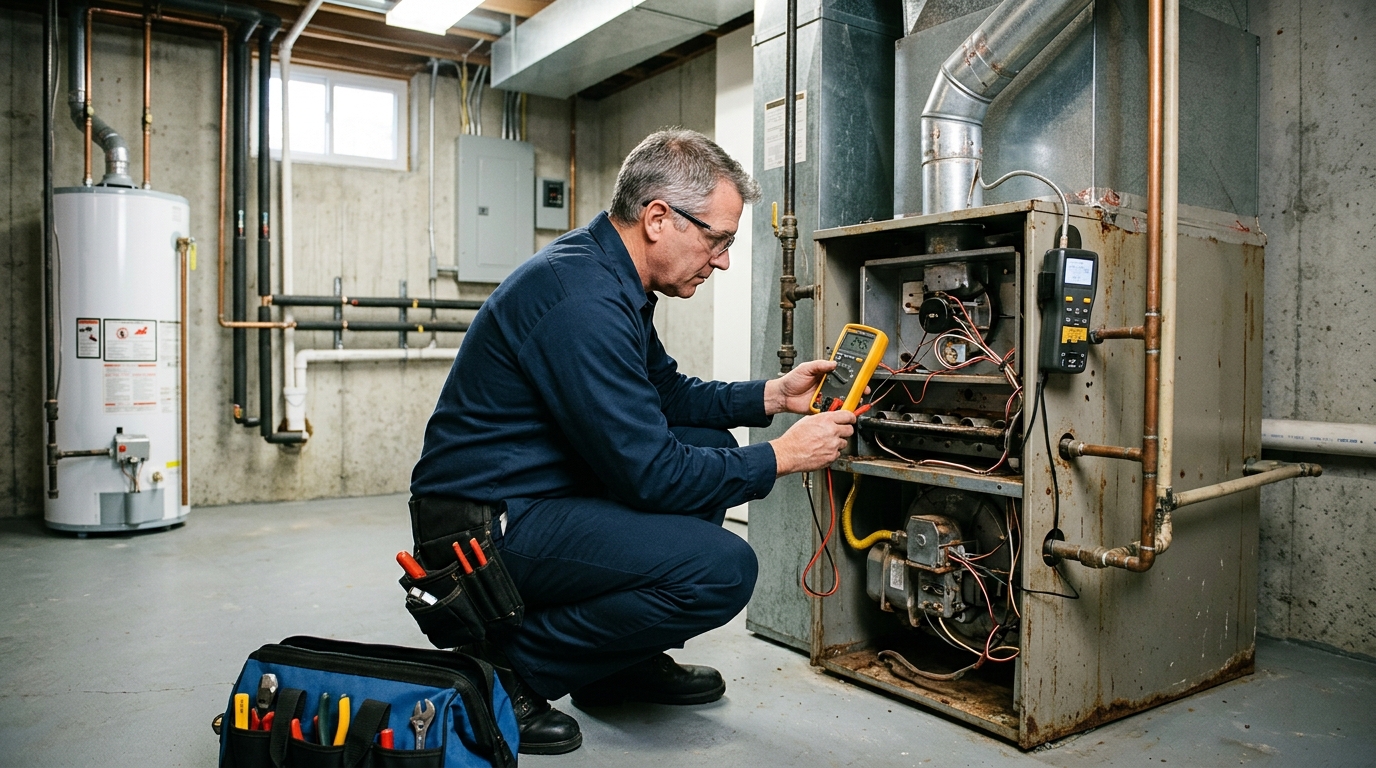
A furnace is one of the hardest-working mechanical systems in a Michigan home. During a typical winter, heating equipment may operate for months, cycling repeatedly through freezing temperatures and periods of heavy heating demand.
That workload naturally raises an important question for homeowners: How long should a furnace actually last?
There is no exact expiration date. Furnace lifespan depends on equipment quality, installation, maintenance history, operating conditions, home characteristics, and how heavily the system is used. Two furnaces installed in the same year can therefore reach very different conditions as they age.
As a general planning range, many well-installed and properly maintained residential furnaces can provide roughly 15 to 20 years of service, with some lasting longer. Age alone, however, should not determine whether a furnace needs replacement.
Homeowners researching furnace replacement near me should evaluate age alongside reliability, repair frequency, energy consumption, comfort, and the condition of major components.
Quick Answer
A residential furnace commonly lasts around 15–20 years, although actual service life varies considerably. In Michigan, long heating seasons can place substantial demand on furnace equipment, making proper installation and regular maintenance especially important.
A furnace does not automatically need replacement when it reaches 15 years. Older equipment should instead be evaluated based on condition, repair history, efficiency, safety, and heating performance.
Key Takeaways
- Many residential furnaces provide approximately 15–20 years of service.
- Furnace lifespan is a planning range, not a guaranteed expiration date.
- Michigan’s long heating season can increase annual furnace operating hours.
- Installation quality can influence long-term reliability.
- Regular maintenance can help identify problems before major failures occur.
- Frequent repairs can indicate an aging furnace is becoming less dependable.
- Rising heating costs may signal declining system performance.
- Equipment condition matters more than age alone when deciding whether to replace a furnace.
Why Furnace Lifespan Varies So Much
Homeowners sometimes expect HVAC equipment to have a predictable lifespan similar to a warranty period. Mechanical equipment does not work that way.
Several factors influence how quickly a furnace ages.
These include:
- Equipment quality
- Installation quality
- Furnace sizing
- Maintenance frequency
- Filter replacement
- Airflow
- Heating demand
- Thermostat settings
- Ductwork condition
- Individual component wear
A furnace that operates under favorable conditions may remain dependable considerably longer than equipment exposed to poor airflow, excessive cycling, or years of neglected maintenance.
That is why age should always be considered together with operating history.
How Michigan’s Climate Affects Furnace Life
Michigan homes can experience extended periods of freezing temperatures, which means furnaces often accumulate substantial operating hours during the heating season.
Long operating periods are not inherently harmful. Furnaces are designed to provide sustained heating.
Problems arise when equipment is already operating under unfavorable conditions such as:
- Restricted airflow
- Dirty filters
- Improper furnace sizing
- Poor ductwork
- Neglected maintenance
- Mechanical deterioration
During periods of high heating demand, these problems can place additional stress on components.
For Michigan homeowners, preparing the furnace before winter is therefore particularly important.
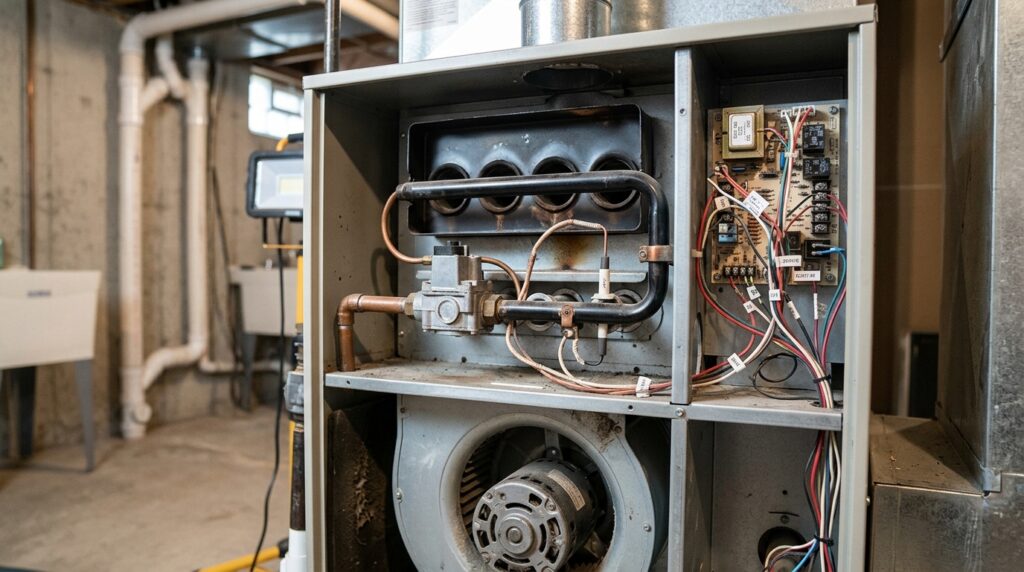
What Happens to a Furnace as It Ages?
A furnace does not normally lose all functionality at once.
Instead, individual components gradually experience wear.
Depending on furnace design, aging may affect:
- Blower motors
- Bearings
- Ignition components
- Flame sensors
- Electrical controls
- Limit switches
- Gas valves
- Heat exchangers
Some of these components can be replaced economically.
That is why a component failure does not necessarily mean the entire furnace has reached the end of its life. Professional furnace repair service can often restore reliable operation when the rest of the equipment remains in good condition.
The decision becomes more complicated when multiple components begin failing within a relatively short period.
Does Regular Maintenance Make a Furnace Last Longer?
Routine maintenance cannot guarantee that a furnace will reach a specific age, but it can help equipment operate under better conditions.
Professional maintenance commonly evaluates:
- Burner operation
- Electrical connections
- Blower components
- Air filters
- Safety controls
- Thermostat operation
- Airflow
- Venting
- Overall system performance
ENERGY STAR recommends professional pre-season heating-system checkups and includes items such as gas connections, burner combustion, heat exchangers, and controls in its heating maintenance guidance.
ENERGY STAR HVAC maintenance guidance can provide homeowners with additional information about recommended heating and cooling system care.
Installation Quality Can Affect Furnace Lifespan
Even high-quality equipment can experience problems when incorrectly installed.
Installation factors that can affect performance include:
- Incorrect equipment sizing
- Improper airflow
- Inadequate ductwork
- Venting problems
- Poor system configuration
An oversized furnace, for example, may repeatedly heat the home quickly and shut down, creating frequent operating cycles.
An undersized furnace may operate for extended periods during colder weather because it struggles to satisfy the home’s heating load.
Both situations can affect comfort and system operation.
Professional installation should therefore evaluate the home’s actual heating requirements rather than simply replacing an old furnace with another unit of similar capacity.
Airflow Problems Can Shorten Equipment Life
Furnaces depend on proper airflow to distribute heat and maintain appropriate operating temperatures.
Restricted airflow can result from:
- Dirty filters
- Blocked return vents
- Closed supply registers
- Duct restrictions
- Blower problems
- Improper duct sizing
When airflow becomes restricted, the furnace may operate under greater stress or activate safety controls.
Homeowners can support proper airflow by checking filters regularly and keeping supply and return vents unobstructed.
Persistent airflow problems should be professionally evaluated rather than repeatedly resetting the furnace.
Furnace Sizing Matters More Than Many Homeowners Realize
A furnace should be sized according to the home’s heating load—not simply the square footage or capacity of the previous furnace.
Heating requirements can be affected by:
- Insulation
- Window efficiency
- Air leakage
- Building orientation
- Home layout
- Local winter design temperatures
- Ductwork
The U.S. Department of Energy provides broader home heating guidance for homeowners evaluating heating equipment and energy use.
Correctly matched equipment generally provides more consistent operation and comfort than a system that is significantly oversized or undersized.
Is a 15-Year-Old Furnace Too Old?
Not necessarily.
ENERGY STAR recommends considering replacement when a furnace or boiler is more than 15 years old, particularly when accompanied by other issues such as frequent repairs, rising energy bills, comfort problems, or excessive noise.
Its heating and cooling replacement guidance can help homeowners understand the factors that should be evaluated as HVAC equipment ages.
A 15-year-old furnace that remains dependable and efficient may continue operating successfully.
A similarly aged furnace experiencing repeated breakdowns and increasing operating costs may be approaching a point where replacement becomes more practical.
Signs an Aging Furnace Deserves Closer Evaluation
Homeowners should pay greater attention when furnace age is accompanied by changes in performance.
Potential warning signs include:
- More frequent service calls
- Higher heating costs
- Difficulty reaching thermostat settings
- Uneven temperatures
- Increasing operating noise
- Frequent cycling
- Long heating cycles
- Major component problems
None of these symptoms alone proves that replacement is required.
Together, however, they can indicate that the furnace is becoming less dependable and should receive a comprehensive professional evaluation.
Think About the Entire Heating and Cooling System
Furnace performance is closely connected to other parts of the home.
For example, comfort problems may originate with:
- Duct leakage
- Insufficient insulation
- Air infiltration
- Thermostat problems
- Restricted airflow
Professional heating and cooling services can help evaluate the complete system rather than assuming every heating problem originates with the furnace itself.
This broader approach becomes particularly valuable when homeowners are deciding whether an aging furnace should be repaired, replaced, or supported by improvements elsewhere in the home.
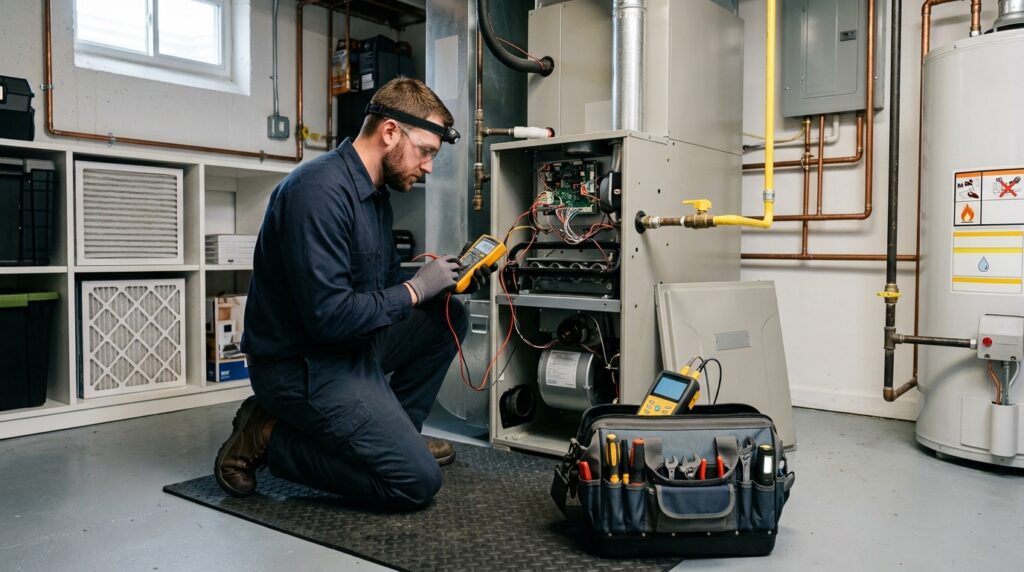
How to Help a Furnace Last Longer
No maintenance strategy can guarantee that a furnace will operate for a specific number of years. However, homeowners can reduce avoidable stress on the equipment and create better operating conditions throughout its service life.
Some of the most important practices include:
- Replacing or cleaning filters as recommended
- Keeping supply and return vents unobstructed
- Scheduling regular professional inspections
- Addressing unusual noises promptly
- Correcting airflow problems
- Maintaining appropriate thermostat settings
- Having ductwork problems investigated
- Keeping the furnace area clean and accessible
Preventive care is especially valuable before Michigan’s heating season, when a developing problem can become much more disruptive during sustained cold weather.
Don’t Ignore the Furnace Filter
The air filter is one of the simplest furnace components homeowners can monitor themselves.
When a filter becomes heavily loaded with dust and debris, airflow through the system can become restricted.
Restricted airflow may contribute to:
- Longer operating cycles
- Reduced comfort
- Increased blower workload
- Furnace overheating
- Safety-control shutdowns
How frequently a filter requires replacement depends on the filter type, household conditions, pets, system usage, and manufacturer recommendations.
Rather than relying on one universal replacement schedule, homeowners should inspect filters regularly and follow the requirements of their specific system.
Annual Professional Inspection Is Valuable
Homeowners can perform basic tasks such as checking filters and keeping vents clear, but furnace maintenance also involves components that require professional evaluation.
A heating inspection may include checking:
- Burner operation
- Electrical connections
- Safety controls
- Blower performance
- Thermostat operation
- Heat exchanger condition
- Venting
- Gas connections
- System cycling
Routine inspection cannot eliminate the possibility of equipment failure, but it can identify developing problems before they become more serious.
This becomes increasingly valuable as the furnace gets older.
Repair Problems Before They Affect Other Components
Minor furnace problems can sometimes create additional stress elsewhere in the system.
For example, an airflow problem may cause the furnace to operate differently from its intended design conditions. An electrical component that is deteriorating may eventually prevent normal startup.
Homeowners should therefore avoid repeatedly resetting equipment or ignoring symptoms that continue returning.
Professional furnace repair service may be appropriate when homeowners notice persistent problems such as:
- Irregular cycling
- Weak airflow
- Startup difficulties
- Unusual sounds
- Inconsistent heating
- Repeated shutdowns
Early diagnosis does not guarantee that a repair will extend furnace life, but it can prevent some correctable problems from remaining unresolved.
How Thermostat Settings Affect Furnace Usage
Thermostat habits influence how frequently heating equipment operates.
During colder Michigan weather, larger indoor-outdoor temperature differences generally increase heating demand. Extremely aggressive thermostat changes may also result in longer heating periods as the system works to restore the desired indoor temperature.
That does not mean homeowners need to keep their homes uncomfortably cold to protect the furnace.
Instead, reasonable and consistent temperature management can help avoid unnecessary heating demand while maintaining comfort.
Programmable and smart thermostats may also make it easier to establish heating schedules appropriate for household routines.
Ductwork Can Affect Furnace Performance
The furnace is only one part of a home’s heating system.
After air is heated, the blower must move it through the ductwork and distribute it throughout the home. Problems within that distribution system can affect both comfort and furnace operation.
Potential duct issues include:
- Leakage
- Restrictions
- Inadequate return airflow
- Poor sizing
- Damaged sections
- Improper balancing
If homeowners experience persistent hot and cold rooms, weak airflow, or unusually long furnace cycles, evaluating the duct system may be just as important as inspecting the furnace itself.
Professional heating and cooling services can help evaluate the heating equipment together with airflow and other system components.
When Does an Older Furnace Become Expensive to Keep?
Age alone does not determine whether a furnace should be replaced.
The economics begin changing when age is accompanied by increasing ownership costs.
Consider an older furnace that requires one inexpensive repair after many years of reliable service. Repairing it may be perfectly reasonable.
Now consider another furnace of the same age that:
- Has required several recent repairs
- Uses increasingly more energy
- Makes abnormal noises
- Struggles during cold weather
- Has major components showing wear
The second furnace presents a very different financial situation.
ENERGY STAR identifies furnaces older than 15 years, frequent repairs, rising energy bills, excessive noise, and comfort problems as reasons homeowners may want to consider replacement.
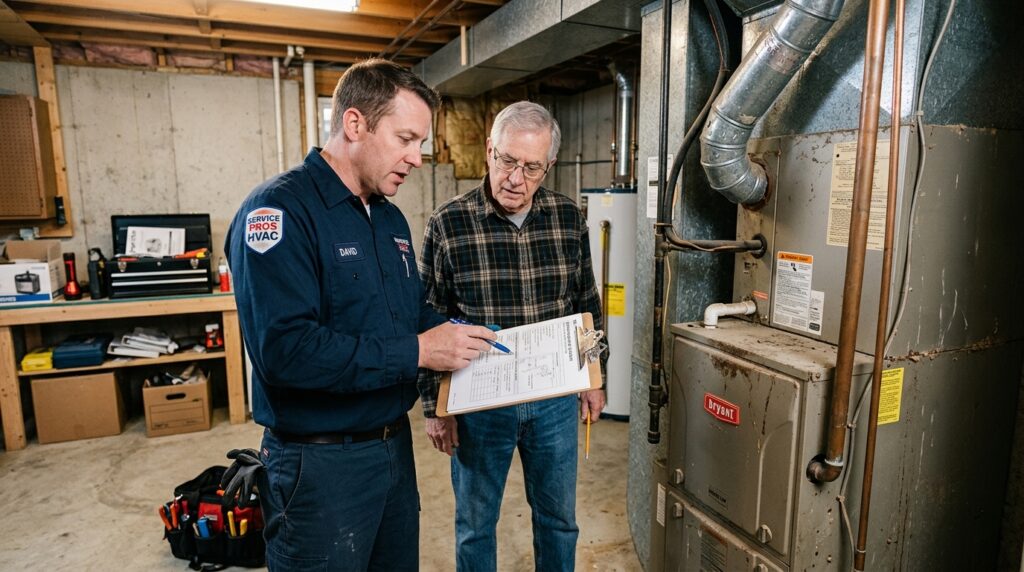
Repair or Replace an Aging Furnace?
As a furnace approaches the later stages of its service life, homeowners should evaluate repair decisions differently than they did when the equipment was relatively new.
Repair may still make sense when:
- The problem is minor.
- The furnace has been reliable.
- Repair history is limited.
- Heating performance remains good.
- Energy consumption remains reasonable.
- No significant safety concern exists.
Replacement deserves greater consideration when:
- Major repairs are required.
- Breakdowns are becoming frequent.
- Heating costs are increasing.
- Comfort has deteriorated.
- Parts are becoming difficult to obtain.
- Several major components show significant wear.
Homeowners researching furnace replacement near me should therefore compare the expected future cost of keeping the existing equipment with the long-term value of replacement.
Don’t Use a Simple Age Formula
Rules such as “replace every furnace after 15 years” are too simplistic.
A furnace does not suddenly become unreliable on its fifteenth birthday.
The 15-year point is better treated as a reason to begin paying closer attention to:
- Repair frequency
- Energy consumption
- Operating noise
- Comfort
- Component condition
- Safety
- Parts availability
ENERGY STAR similarly presents age as one consideration alongside frequent repairs, rising bills, excessive noise, and comfort issues rather than as a stand-alone expiration date.
Energy Efficiency Matters More as Equipment Ages
An older furnace can continue producing heat while becoming less attractive economically.
Efficiency should therefore be considered when deciding how much money to invest in aging equipment.
For fuel-burning furnaces, annual fuel utilization efficiency (AFUE) is used to describe how effectively the equipment converts fuel into useful heat over a typical year.
When comparing an existing furnace with replacement equipment, homeowners should consider:
- Existing furnace efficiency
- Replacement efficiency
- Annual heating demand
- Fuel costs
- Installation cost
- Expected ownership period
A higher-efficiency furnace may reduce fuel consumption, but the financial benefit varies considerably from one home to another.
Safety Becomes Increasingly Important With Aging Equipment
Comfort and operating cost are not the only considerations.
Fuel-burning furnaces depend on safe combustion and proper venting. Problems involving the heat exchanger, flue, gas system, or combustion process require professional evaluation.
The EPA identifies leaking furnaces, chimneys, back-drafting, and poorly maintained combustion appliances among potential residential sources of carbon monoxide. Carbon monoxide itself is colorless and odorless, making functioning alarms particularly important.
Homeowners should not attempt to evaluate combustion safety based on smell or visual inspection alone.
If a carbon monoxide alarm activates, occupants should follow the alarm manufacturer’s safety instructions and seek appropriate emergency assistance rather than continuing to operate suspected equipment.
Start Planning Before an Older Furnace Fails
One advantage of understanding furnace lifespan is that homeowners can begin planning before replacement becomes an emergency.
If a furnace is approaching the later portion of its expected service life, homeowners can begin researching:
- Replacement equipment
- Efficiency options
- Installation requirements
- Contractor qualifications
- Warranty coverage
- Budget and financing
- Ductwork condition
Planning does not mean replacing a functioning furnace prematurely.
It simply provides more time to make an informed decision if the equipment begins showing signs of deterioration.
This can be particularly useful in Michigan, where losing heat during a severe winter cold spell can create pressure to make an expensive replacement decision quickly.
What Should a Furnace Replacement Evaluation Include?
When replacement becomes appropriate, the process should involve more than choosing a furnace from a product catalog.
A professional evaluation should consider:
- Home heating requirements
- Equipment capacity
- Existing ductwork
- Supply and return airflow
- Venting
- Fuel type
- Efficiency options
- Thermostat compatibility
- Installation requirements
Correct equipment sizing is especially important.
Replacing an old furnace with equipment of identical capacity does not automatically mean the new furnace is correctly sized for the home.
Changes such as upgraded windows, additional insulation, home additions, or air-sealing improvements can alter heating requirements over time.
Choosing a Heating Contractor
Whether an aging furnace needs maintenance, repair, or replacement, contractor quality matters.
Homeowners can evaluate:
- Licensing and insurance
- Furnace experience
- Diagnostic procedures
- Load-calculation practices
- Written estimates
- Warranty support
- Maintenance services
- Emergency availability
Customer feedback can provide additional context. Reviewing public business profiles can help homeowners evaluate reported service experiences alongside technical qualifications, licensing, and warranty information.
Reviews are most useful when considered as one part of a broader contractor-selection process.
When Should You Have an Older Furnace Professionally Evaluated?
Homeowners do not necessarily need to wait for complete failure.
Professional evaluation becomes particularly useful when an aging furnace begins displaying several changes simultaneously.
Examples include:
- Two or more recent repairs
- Increasing heating costs
- Difficulty maintaining temperature
- Unusual operating noises
- Frequent cycling
- Weak airflow
- Repeated startup problems
- Major component deterioration
The purpose of the inspection should be to understand the equipment’s condition—not automatically to justify replacement.
A qualified technician can help determine whether the current problem is isolated or part of a larger pattern of furnace deterioration.
Conclusion
A furnace’s expected lifespan is useful for planning, but it should never be treated as an exact expiration date.
Many residential furnaces provide approximately 15 to 20 years of service, while some operate longer and others require replacement earlier. Installation quality, maintenance, airflow, equipment sizing, operating conditions, and component wear all influence the actual outcome.
For Michigan homeowners, furnace reliability deserves particular attention because heating equipment operates extensively during the colder months.
As a furnace ages, the most useful approach is to monitor the pattern of its performance.
A furnace that remains reliable, safe, reasonably efficient, and inexpensive to maintain may continue providing useful service even at an advanced age.
A furnace experiencing frequent repairs, increasing energy consumption, declining comfort, major component problems, or safety concerns deserves closer evaluation.
Planning before complete failure gives homeowners time to compare repair and replacement options, evaluate contractors, understand equipment choices, and make a decision based on long-term value rather than the pressure of a winter heating emergency.
Frequently Asked Questions
How long does a furnace usually last in Michigan?
Many residential furnaces provide roughly 15 to 20 years of service, although actual lifespan varies based on equipment quality, installation, maintenance, operating conditions, and annual heating demand.
Can a furnace last longer than 20 years?
Yes. Some furnaces continue operating beyond 20 years, particularly when they are well maintained and have not experienced major component problems. However, older equipment should be evaluated for reliability, efficiency, safety, and repair history.
Does Michigan’s cold climate shorten furnace lifespan?
Michigan’s long heating season increases annual furnace operating hours, which can contribute to wear over time. Proper installation, airflow, routine maintenance, and timely repairs become especially important in colder climates.
Is a 15-year-old furnace too old?
Not necessarily. A 15-year-old furnace may still have useful life remaining if it is reliable, efficient, and well maintained. Age becomes more significant when paired with frequent repairs, rising energy costs, or declining comfort.
How do I know when an older furnace should be replaced?
Common warning signs include:
- Frequent repairs
- Rising heating bills
- Uneven temperatures
- Excessive operating noise
- Long or short heating cycles
- Difficulty maintaining thermostat settings
- Major component problems
When these symptoms occur together, furnace replacement near me may deserve serious consideration.
Can regular maintenance extend furnace life?
Routine maintenance can help identify developing problems, support proper airflow and combustion, and reduce unnecessary wear. It cannot guarantee a specific lifespan, but it can help equipment operate under better conditions.
How often should a furnace be professionally serviced?
Most furnaces benefit from professional maintenance once each year, ideally before the heating season. Annual inspections help identify issues involving burners, electrical connections, airflow, controls, and safety systems.
Can frequent repairs mean the furnace is near the end of its life?
Yes. One repair is not necessarily concerning, but repeated breakdowns over a short period can indicate declining reliability. Professional furnace repair service can help determine whether the problem is isolated or part of broader equipment deterioration.
Does furnace efficiency decline with age?
It can. Component wear, airflow problems, dirty equipment, and mechanical deterioration may reduce overall performance. However, actual efficiency depends on both equipment condition and how the entire heating system is operating.
Can ductwork affect how long a furnace lasts?
Yes. Poor duct design, restrictions, leakage, or inadequate return airflow can affect furnace operation and comfort. Professional heating and cooling services can help evaluate the furnace together with the duct system and airflow.
Should I replace an old furnace before it completely fails?
Not always. However, planning ahead can be beneficial when an aging furnace is showing several warning signs. Replacing equipment before an emergency can give homeowners more time to compare options, warranties, efficiency ratings, and installation proposals.
What should I consider before replacing an aging furnace?
Important factors include:
- Furnace age
- Repair history
- Energy consumption
- Heating performance
- Major component condition
- Safety
- Ductwork
- Warranty options
- Expected ownership period
The goal is to compare the future cost of keeping the existing furnace with the long-term value of replacement.