

Comfortable medical scrubs combine proper fit, flexible fabric, useful stretch, manageable garment weight, comfortable waistbands, and functional design. For healthcare professionals working extended or active shifts, comfort should be evaluated through real movements such as sitting, bending, reaching, and walking rather than judging a scrub set only by softness or appearance.
The best comfortable professional scrubs should support everyday movement without constant pulling, waistband adjustment, overheating, or unnecessary garment bulk. Comfort is not determined by one fabric fiber or feature. It comes from how the complete garment fits and performs throughout the workday.
Quick Answer
Medical scrubs are generally more comfortable for long workdays when they provide:
- Movement-friendly fit through the shoulders, torso, hips, and legs.
- Appropriate stretch for bending, reaching, sitting, and walking.
- Suitable fabric weight for the work environment and activity level.
- Breathable construction that supports comfort during active work.
- A comfortable waistband that remains secure without excessive pressure.
- Functional pockets positioned according to real work needs.
- Practical care requirements for frequently worn work clothing.
A soft fabric can improve initial comfort, but long-shift comfort depends on the interaction of fabric, fit, garment construction, and work environment.
Why does scrub comfort matter during long workdays?
Healthcare work can involve physically and mentally demanding tasks as well as nonstandard or extended schedules. The National Institute for Occupational Safety and Health information on fatigue and work identifies extended work hours and demanding tasks among factors associated with workplace fatigue.
Comfortable clothing does not prevent occupational fatigue or replace appropriate workplace controls. However, avoiding unnecessary garment restriction, repeated adjustment, or uncomfortable pressure can remove preventable distractions from an already demanding workday.
Consider how often a healthcare professional may change position during one shift:
- Walking between rooms
- Sitting to document information
- Reaching toward supplies
- Bending toward equipment
- Standing for extended periods
- Moving the arms repeatedly
- Layering clothing in changing temperatures
A garment that feels fine for five minutes may become frustrating when a small fit problem is repeated for several hours.
This is why long-workday comfort should be judged by sustained wear and repeated movement, not simply by how soft the material feels when first touched.
What role does scrub fit play in all-day comfort?
Fit is one of the most important parts of scrub comfort.
Scrubs that are too tight may pull during movement. Scrubs that are excessively loose can create bulk, shift around the body, or make heavily loaded pockets feel less stable.
The goal is a functional room.
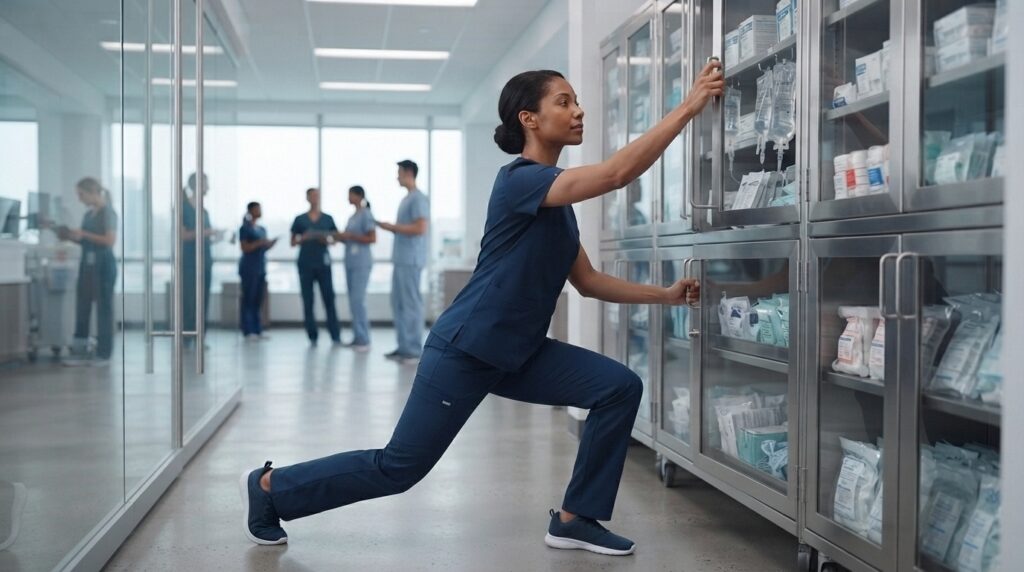
Comfortable scrub tops should move with the upper body
A scrub top should allow natural movement through the shoulders, chest, upper back, and torso.
To evaluate the fit, try several basic movements:
- Reach both arms forward.
- Lift the arms above shoulder height.
- Cross the arms over the chest.
- Rotate the torso gently.
- Sit and lean slightly forward.
Watch for severe pulling across the upper back or shoulders. Also consider whether the neckline, sleeves, or lower hem need frequent adjustment.
The body shape and fit preferences of each wearer are different. Exploring dedicated medical scrubs for women can make it easier to consider women’s tops, pants, jackets, and complete scrub silhouettes together rather than treating every scrub cut as interchangeable.
Scrub pants should be tested while sitting and bending
Standing in front of a mirror is not enough to evaluate scrub pants.
Sit down. Bend the knees. Take a long step. Perform a shallow squat. Walk naturally.
Check whether:
- The waistband remains secure.
- The hips feel restricted.
- The thighs have enough movement room.
- The rise remains comfortable while sitting.
- The pant legs interfere with walking.
- The length works with typical work shoes.
Scrub pant silhouettes can also affect how the garment feels during movement. Joggers, tapered pants, flare styles, wide-leg pants, and straight or relaxed designs may distribute fabric differently around the legs.
The most comfortable style is the one that suits the wearer’s proportions, preferred fit, and normal work movements.
What scrub fabrics feel comfortable for long shifts?
There is no single fiber that automatically creates the most comfortable medical scrub fabric.
The finished fabric must be considered as a complete material.
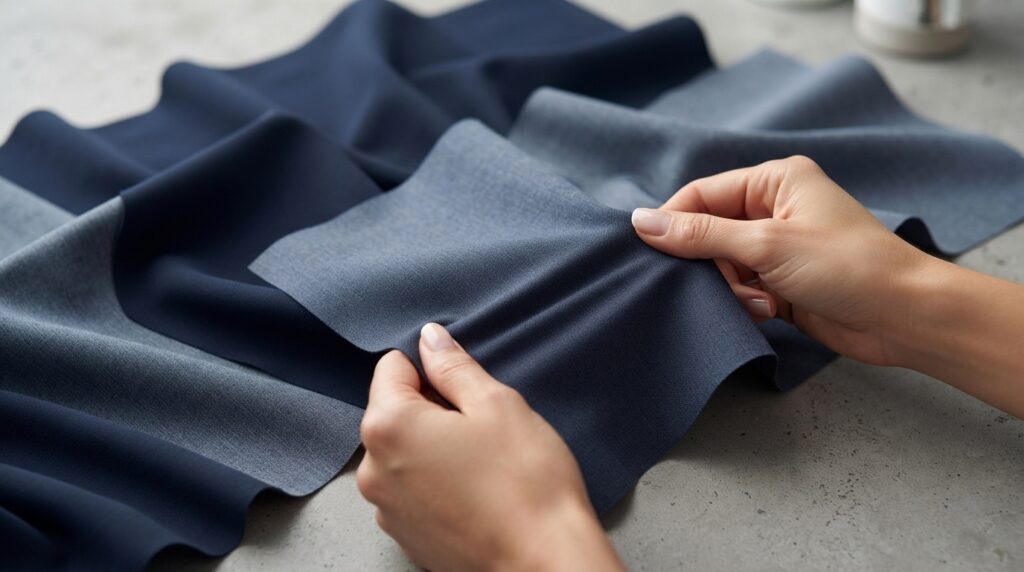
Common scrub fabrics may contain:
- Polyester
- Recycled polyester
- Rayon
- Spandex
- Cotton
- Blends of several fibers
The percentage of each fiber can influence the fabric, but comfort also depends on fabric construction, weight, finishing, stretch, recovery, and garment design.
Softness is only one part of fabric comfort
Soft fabric may feel pleasant against the skin during an initial fitting.
However, softness does not answer every long-shift question.
A wearer should also consider:
- Does the fabric stretch during movement?
- Does it feel heavy?
- Does the material cling?
- How does it drape?
- Does the garment feel comfortable when layered?
- Are the care instructions practical?
A scrub fabric can feel very soft but still be uncomfortable if the garment fit restricts the shoulders or the waistband creates pressure.
Fabric weight affects the wearing experience
Lightweight scrub fabrics may appeal to healthcare professionals who work in warmer environments or remain physically active throughout the day.
A more substantial fabric may appeal to wearers who prefer a structured feel.
Neither choice is universally better.
The right fabric weight should reflect:
- Workplace temperature
- Individual heat comfort
- Activity level
- Layering habits
- Garment style
Someone who moves continuously may evaluate fabric weight differently from a professional who spends a larger part of the shift in a seated clinical or administrative role.
Drape can affect comfort and appearance
Fabric drape describes how a material hangs and moves around the body.
A fluid fabric may fall more softly around the torso or legs. A more structured material can maintain a firmer shape.
Drape may influence:
- How the top sits around the torso
- How pants move around the legs
- Whether fabric feels clingy
- The overall garment silhouette
The best drape is a matter of personal preference and work requirements.
How important is stretch in comfortable medical scrubs?
Stretch can improve freedom of movement, particularly for active healthcare roles.
It may be noticeable when:
- Reaching above the shoulders
- Bending toward a patient
- Sitting for documentation
- Walking quickly
- Moving from sitting to standing
- Performing repeated arm movements
However, stretch should be considered together with recovery.
What is fabric recovery?
Recovery describes the material’s ability to move back toward its original shape after being stretched.
A fabric may stretch easily, but the complete garment still needs to maintain a usable fit and professional shape during regular wear.
This is why simply choosing the stretchiest material is not always the best strategy.
Healthcare professionals should evaluate how the scrub set feels after several different movements.
Four-way stretch versus general stretch
Some fabrics are designed to stretch in multiple directions. This can support movement across different areas of the garment.
However, marketing terminology alone should not replace a practical fit test.
The wearer should still check:
- Shoulder movement
- Torso rotation
- Hip flexibility
- Knee bending
- Waist comfort
Fabric performance cannot correct a fundamentally unsuitable garment size or cut.
Which waistband is most comfortable for scrub pants?
Waistband comfort is highly individual.
Several waistband styles are used in medical scrub pants.
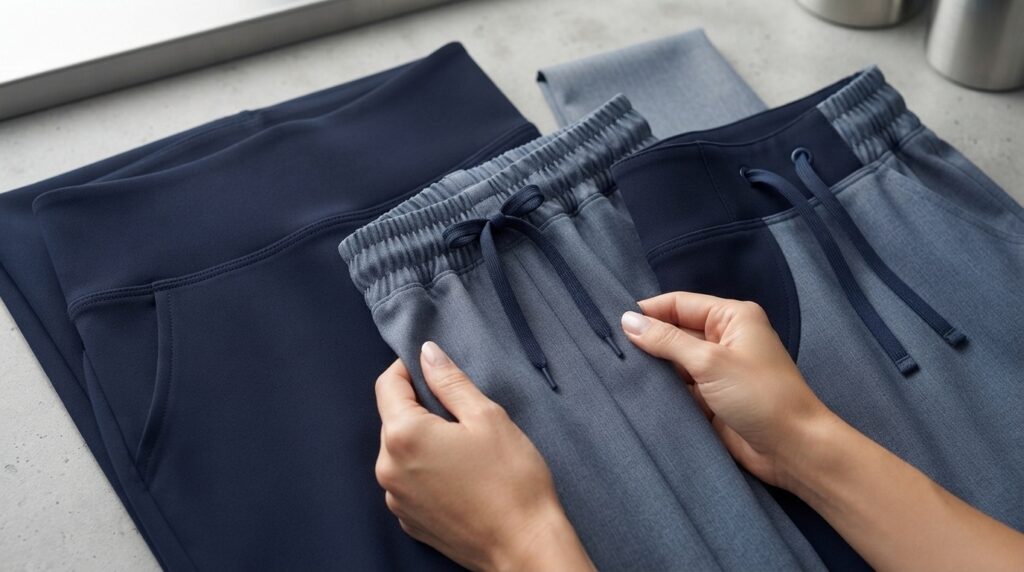
Yoga-style waistbands
Yoga-style waistbands generally provide a broad, flexible area around the waist.
They may suit wearers who prefer less concentrated pressure from a narrow waistband.
The waistband should remain secure while walking and sitting.
Elastic waistbands
Elastic waistbands can provide simple, flexible adjustment.
When evaluating elastic construction, consider whether the waistband:
- Feels secure
- Rolls during movement
- Creates excessive pressure
- Changes comfort while sitting
An elastic waistband that feels acceptable while standing may feel different after an extended seated period.
Drawstring waistbands
Drawstrings allow the wearer to adjust waist tension.
This can be useful for people who prefer more control over how firmly their pants sit.
The drawstring position and knot should remain comfortable during normal work movements.
Combination waistbands
Some scrub pants combine elastic and drawstring features.
The combination can provide stretch while allowing additional adjustment.
No waistband design is automatically the best. The important issue is whether it remains comfortable and secure throughout the wearer’s typical workday.
Does breathability make scrubs more comfortable?
Breathability can be an important consideration, particularly for healthcare professionals with active roles or warm work environments.
However, perceived temperature comfort is influenced by several garment and environmental factors.
These include:
- Fabric construction
- Fabric weight
- Garment fit
- Activity level
- Workplace temperature
- Layers worn under or over the scrubs
A lightweight garment may feel comfortable during active movement, while another wearer may prefer additional layering in cooler clinical spaces.
For women evaluating different silhouettes and garment combinations, dedicated medical scrubs for women can help organize choices by tops, pants, and layers. Men can similarly review medical scrubs for men according to top, pant, and jacket requirements.
The goal is not simply to find a garment advertised as breathable. The wearer should consider how the entire scrub outfit feels in the actual workplace.
How do pockets affect scrub comfort?
Pockets are useful, but their design can affect how a garment feels.
More pockets do not automatically make scrubs more functional or comfortable.
A heavily loaded pocket may:
- Pull one side of a scrub top downward
- Add weight around the hips
- Affect garment movement
- Create bulk while sitting
- Make items less stable during fast movement
Choose pockets around real daily needs
Before selecting scrubs, consider what is regularly carried.
Depending on the role and workplace rules, this may include:
- Pens
- Small work notes
- Identification items
- Communication devices
- Approved work tools
Then consider where those items are easiest to access.
Some wearers prefer top pockets. Others prefer pant or cargo storage.
Pocket placement should match the actual workflow rather than the assumption that the highest pocket count is always better.
Secure storage can matter for active roles
A pocket closure or deeper pocket may be useful when the wearer moves frequently.
However, closures should also be practical to use.
A secure pocket that is difficult to access repeatedly may not suit every role.
Comfort and functionality should be evaluated together.
Can scrub seams and garment construction affect comfort?
Yes.
Small construction details may become more noticeable after several hours of wear.
Potential comfort considerations include:
- Seam placement
- Sleeve shape
- Neckline construction
- Waistband width
- Cuff design
- Zippers
- Drawstring placement
- Pocket attachment
A seam that repeatedly rubs against the skin or a zipper that creates pressure in a certain seated position may become distracting.
Wearers with specific sensitivity concerns should pay closer attention to the areas where garments contact the neck, waist, underarms, and ankles.
Should healthcare professionals wear scrub jackets for comfort?
A scrub jacket can help with temperature management when workplace conditions change during the day.
Some healthcare environments may feel cool, while physically active tasks can make the wearer feel warmer.
A removable layer provides flexibility.
When choosing a scrub jacket, evaluate:
- Jacket weight
- Sleeve movement
- Shoulder fit
- Closure design
- Pocket placement
- Length
- Compatibility with the scrub top
The jacket should allow the arms to move without excessive pulling.
A jacket that fits too closely over a scrub top may restrict shoulder movement even when each garment feels comfortable when worn separately.
Does scrub care affect long-term comfort?
Scrubs are workwear and may be laundered frequently.
The CDC’s guidance on healthcare laundry and bedding includes uniforms and scrub suits within the broader healthcare laundry and textile category. Healthcare workers should follow facility procedures for handling work clothing and contaminated textiles.
Garment care instructions also matter because incorrect washing or drying may affect the appearance and condition of workwear.
Before selecting scrubs, check:
- Washing instructions
- Drying instructions
- Fabric composition
- Recommended care practices
- Whether the garment fits the normal laundry routine
Practical maintenance is part of long-term satisfaction.
A scrub set may initially feel comfortable but become inconvenient if its care requirements do not suit the wearer’s normal work schedule.
Are comfortable scrubs the same as protective clothing?
No. Everyday medical scrubs should not automatically be treated as personal protective equipment.
OSHA guidance distinguishes ordinary uniforms or scrubs worn similarly to street clothing from PPE, while PPE is intended to minimize exposure to workplace hazards.
Where tasks require protective clothing, workers and employers should follow applicable workplace procedures and OSHA personal protective equipment guidance.
NIOSH also provides separate information about protective clothing in healthcare for biological-fluid exposure considerations.
A comfortable scrub set can support everyday workwear needs, but comfort features such as stretch, pockets, and lightweight fabric do not replace required PPE.
How should you test scrubs for long-shift comfort?
A practical fitting routine can identify problems before purchasing.
Step 1: Check your normal standing fit
Stand naturally.
Check the shoulders, torso, waistband, hips, and pant length.
The garment should not require immediate adjustment.
Step 2: Sit for several minutes
Notice the waistband and pant rise.
Check whether the top bunches excessively or the pants create uncomfortable pressure.
Step 3: Reach and bend
Raise the arms, reach forward, and bend carefully.
Look for pulling through the shoulders, back, hips, and thighs.
Step 4: Walk naturally
Take normal and slightly longer steps.
Evaluate pant movement and garment stability.
Step 5: Test the pockets
Place typical lightweight work items in the intended pockets.
Check whether the garment pulls or becomes uncomfortable.
Step 6: Consider the full outfit
If a jacket or underscrub will normally be worn, consider how the layers interact.
The fit of one garment can change when another layer is added.
What should healthcare workers prioritize when choosing comfortable scrubs?
Start with the job rather than the trend.
A highly active role may place greater importance on stretch, light fabric, and secure pockets.
A wearer who sits frequently may pay closer attention to waistband comfort and pant rise.
Someone working in changing temperatures may consider layering options.
A practical priority list might include:
- Unrestricted movement
- Comfortable fit
- Appropriate fabric weight
- Useful stretch
- Suitable waistband design
- Accessible pockets
- Practical garment care
- Workplace dress requirements
Style can still matter. Modern scrub cuts can provide a polished appearance while supporting practical needs.
The strongest choice balances appearance with the realities of the workday.
Final thoughts
Comfortable medical scrubs are not defined by one fabric, one waistband, or one type of stretch.
Long-workday comfort develops from the relationship between fit, fabric, mobility, garment weight, breathability, waistband design, pocket placement, layering, and care requirements.
Healthcare professionals should test scrubs through real movement and consider the conditions of their normal workplace. A garment that supports sitting, reaching, bending, walking, and extended wear is more relevant than one chosen only because it feels soft during a brief fitting.
The best scrub set is ultimately the one that requires less unnecessary adjustment and suits the wearer’s actual work routine, body proportions, and functional priorities.
Frequently Asked Questions
What type of scrubs are most comfortable for long shifts?
The most comfortable scrubs generally provide movement-friendly fit, appropriate stretch, suitable fabric weight, and a comfortable waistband. The ideal combination varies by role, workplace temperature, body proportions, and personal fit preference.
Are lightweight scrubs better for long workdays?
Lightweight scrubs may feel comfortable in warm or highly active environments, but they are not automatically better for every wearer. Workplace temperature, layering, fabric construction, and personal preference should all be considered.
Is more spandex always better in medical scrubs?
No. Spandex can contribute stretch, but overall comfort depends on the entire fabric blend and garment construction. Fit, fabric weight, recovery, waistband design, and garment cut also influence how scrubs feel during movement.
Which scrub waistband is most comfortable?
There is no single most comfortable waistband. Yoga-style, elastic, drawstring, and combination waistbands suit different preferences. The waistband should remain secure and comfortable while standing, sitting, bending, and walking.
How can I tell whether scrubs will be comfortable for a 12-hour shift?
Test the garments while sitting, reaching, walking, bending, and using the pockets. Consider fabric weight, stretch, waistband pressure, seam placement, and temperature comfort. A short movement test can reveal fit problems that are not obvious while standing still.
Do comfortable medical scrubs replace protective clothing?
No. Ordinary uniforms or scrubs generally are not intended to replace PPE. Required protective clothing should be selected according to workplace hazards, applicable safety requirements, and facility procedures.